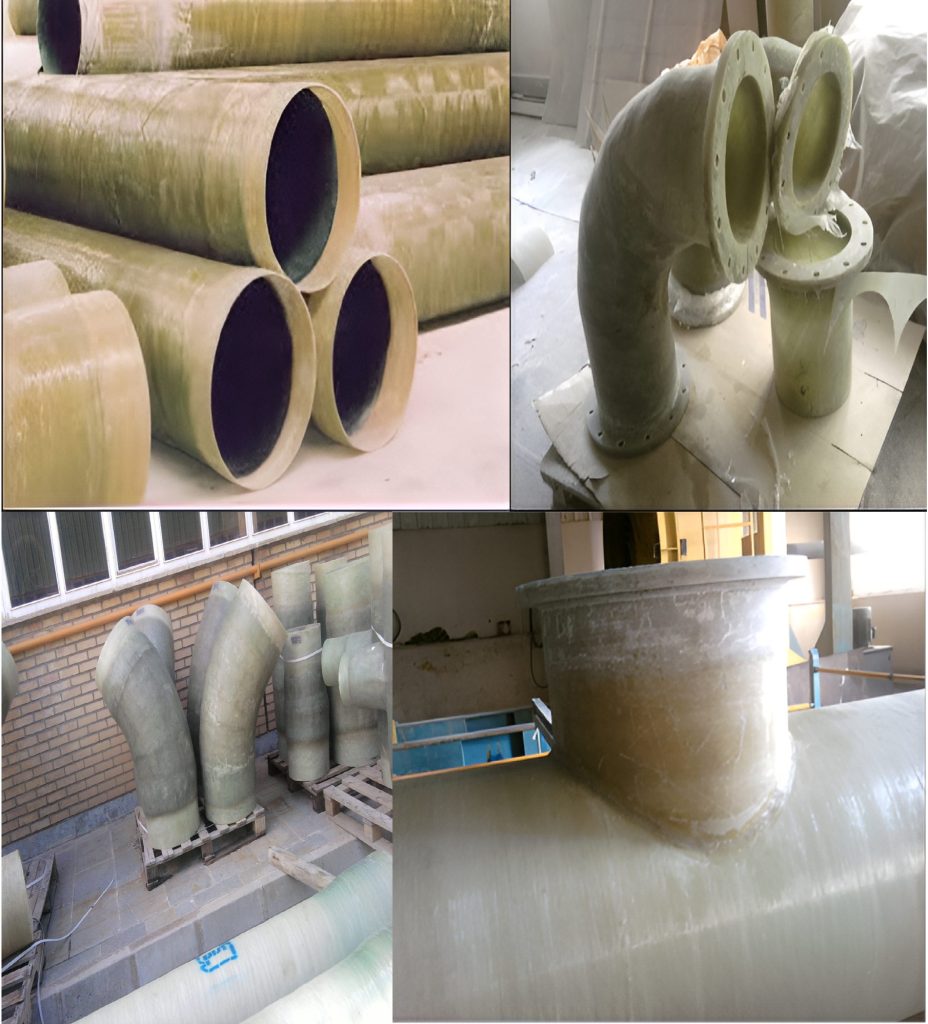
G.R.P, water pipe & connections
Supplier of High-Quality GRP Composite Pipes and Fittings
Diba Fiberglass began its operations in 2009 specializing in composite pipes made from Glass Reinforced Plastic (GRP) using the Discontinuous Filament Winding (DFW) method. In subsequent years, the company rapidly expanded its product range to include fiberglass fittings designed according to international standards. Their products are primarily manufactured using Glass Reinforced Polyester (GRP) resin.
Diba Fiberglass has earned internationally recognized certifications including ISO/TS 29001:2007 for quality management, ISO 14001:2004 for environmental management, Integrated Management System (IMS), and OHSAS 18001 for occupational health and safety. Additionally, the company holds the National Iranian Standard certification, reflecting its commitment to quality and compliance.
Through Roushan-son, these premium GRP pipes and fittings are reliably supplied and available to meet diverse industry needs.
Laboratory and Quality Control
Diba Fiberglass, whose products are supplied exclusively by Roushan-son, is committed to achieving the highest level of customer satisfaction through superior product quality. To this end, Diba Fiberglass conducts rigorous quality tests in accordance with both international and Iranian national standards.
Quality testing is systematically divided into two main categories: raw materials and final products. This comprehensive approach ensures that all supplied GRP products consistently meet the highest quality standards before reaching customers.
Advantages
Distinct Advantages of Discontinuous Filament Winding (DFW) Pipes Compared to Conventional GRP Pipe Manufacturing Methods
1. Uniform and consistent production quality throughout the entire product.
2. Ability to use different types of resins at various stages of the manufacturing process.
3. Prevention of delamination defects due to the specific arrangement and composition of pipe layers.
4. Achieving varying mechanical strengths tailored to the pipe’s design winding angle.
5.High purity and quality of raw materials used.
6. Capability to withstand high pressures depending on fiber type and layering design.